Friday, February 28, 2014


The cities we went to study St Paul following his first missionary journey

Antioch of Orontes
Visiting Antioch of Orontes.
According the Acts of the Apostles:
It was from this site where St Paul and Barnabas traveled on a ship to Cypres
According the Acts of the Apostles:
With the church firmly established at Antioch in Syria, the time was right for the gospel to be taken farther afield. Acts records that one day while members of the church were worshiping and fasting, the Holy Spirit spoke to them:
"Set apart for me Barnabas and Saul for the work to which I have called them" (Acts 13:2).
It was from this site where St Paul and Barnabas traveled on a ship to Cypres


Following the footsteps of Saint Paul
In our module of study we have as a professor Father Scott N. Brodeur, a Jesuit Priest from the Gregorian University. We traveled to Turkey to study the writings of Paul visiting the towns and places where he preached the Gospel to Jews and Gentiles.
Una experiencia inolvidable visitar los lugares donde San Pablo iniciamla evangelizacion hacia los gentiles en Antioquia.

Una experiencia inolvidable visitar los lugares donde San Pablo iniciamla evangelizacion hacia los gentiles en Antioquia.
Visit to St Paul Basilica in Rome-La visita a la tumba del Apostol
After our visit to the church of the three fountains we visit the St Paul's Basilica.
Basílica de San Pablo Extramuros es una de las cinco iglesias consideradas como las más antiguas de Roma. La Iglesia católica considera que son la Basílica de San Juan de Letrán, Basílica de San Lorenzo Extramuros, Basílica de Santa María la Mayor y la Basílica de San Pedro. Es la segunda basílica más grande de Roma, después de San Pedro, de la que dista 11 kilómetros. Según la tradición es el lugar donde el apóstol Pablo fue enterrado.

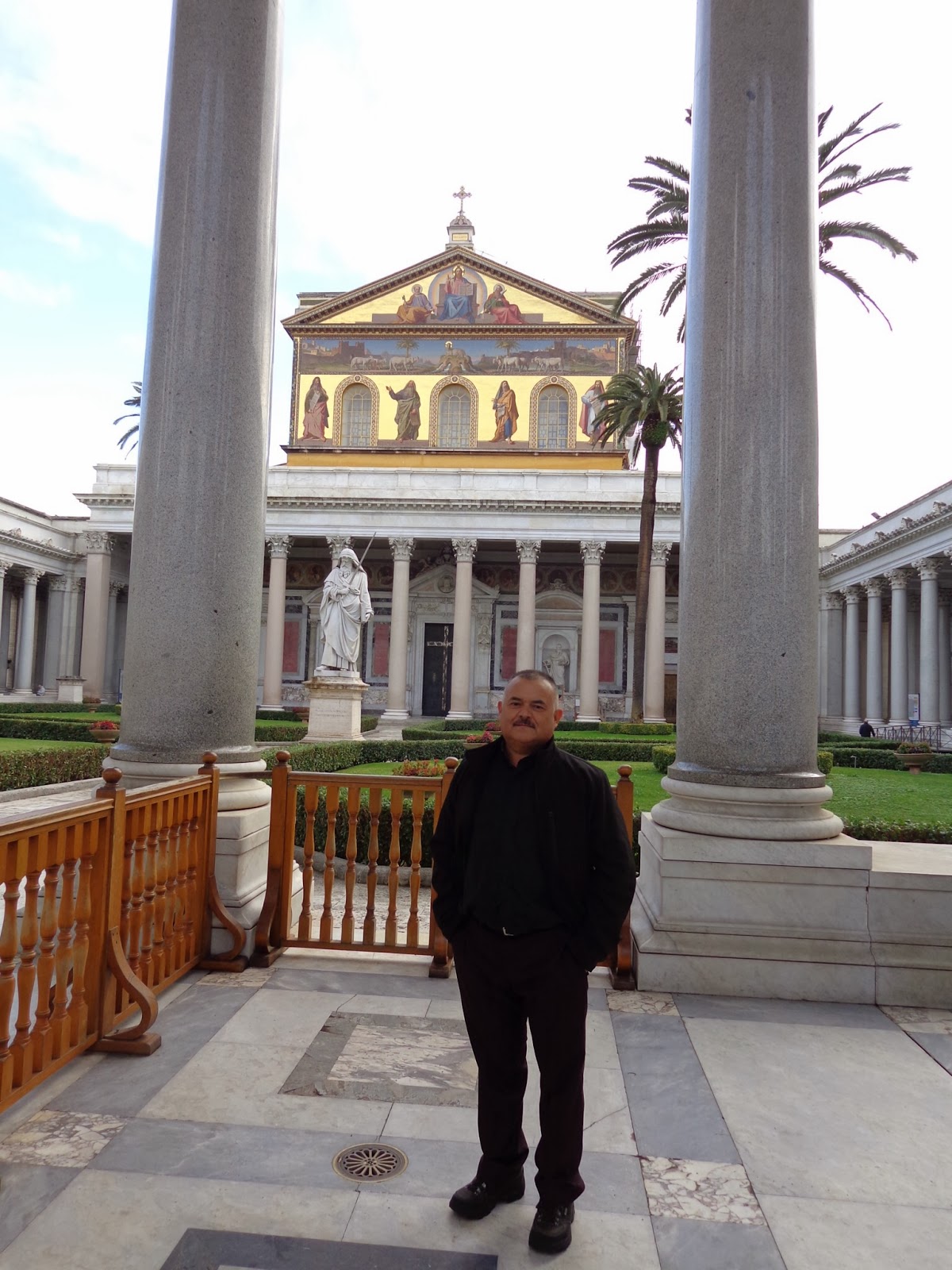


Basílica de San Pablo Extramuros es una de las cinco iglesias consideradas como las más antiguas de Roma. La Iglesia católica considera que son la Basílica de San Juan de Letrán, Basílica de San Lorenzo Extramuros, Basílica de Santa María la Mayor y la Basílica de San Pedro. Es la segunda basílica más grande de Roma, después de San Pedro, de la que dista 11 kilómetros. Según la tradición es el lugar donde el apóstol Pablo fue enterrado.
Pictures of the church of three fountains.
Legend relates that, when St Paul was decapitated, his head bounced three times and fountains miraculously sprang up at each place where it touched the ground. However, the springs, called the Aquae Salviae, as in the Latin name for the church, were known in pre-Christian times, and excavations have revealed ancient mosaic pavements. It is also said[citation needed] that there was a stone pine tree at the place where Paul was martyred, and the traditional identification of this place with the site of his martyrdom was strengthened when ancient stone-pine cones were found here during excavations in 1857.(Wikipedia)


Legend relates that, when St Paul was decapitated, his head bounced three times and fountains miraculously sprang up at each place where it touched the ground. However, the springs, called the Aquae Salviae, as in the Latin name for the church, were known in pre-Christian times, and excavations have revealed ancient mosaic pavements. It is also said[citation needed] that there was a stone pine tree at the place where Paul was martyred, and the traditional identification of this place with the site of his martyrdom was strengthened when ancient stone-pine cones were found here during excavations in 1857.(Wikipedia)
Subscribe to:
Posts (Atom)